KPV uptake and intestinal delivery
A small hormone fragment can quiet inflammatory signalling in cell and animal experiments. Getting it into the right tissue, intact, occupies much of the later work.
Alpha-MSH and KPV
KPV consists of lysine, proline and valine, corresponding to positions 11 to 13 at the end of alpha-melanocyte-stimulating hormone, or alpha-MSH. The review of alpha-MSH and related tripeptides describes anti-inflammatory activity in cells and animals without the parent hormone's pigmentary action.
I underestimated how untidy a fragment’s relationship with its parent could be. It retains an activity of the larger hormone, yet some of the animal work points away from the receptor most easily associated with that parent. In mouse models of inflammatory bowel disease, KPV's activity persisted in mice deficient in MC1R, a melanocortin receptor. Treated mice recovered earlier, regained more body weight and had less inflammatory infiltration in the colon.
That experiment narrows a mechanistic question. The subject remains mouse colitis, and the result supplies no established human use for gut or skin conditions.
Entry into intestinal cells
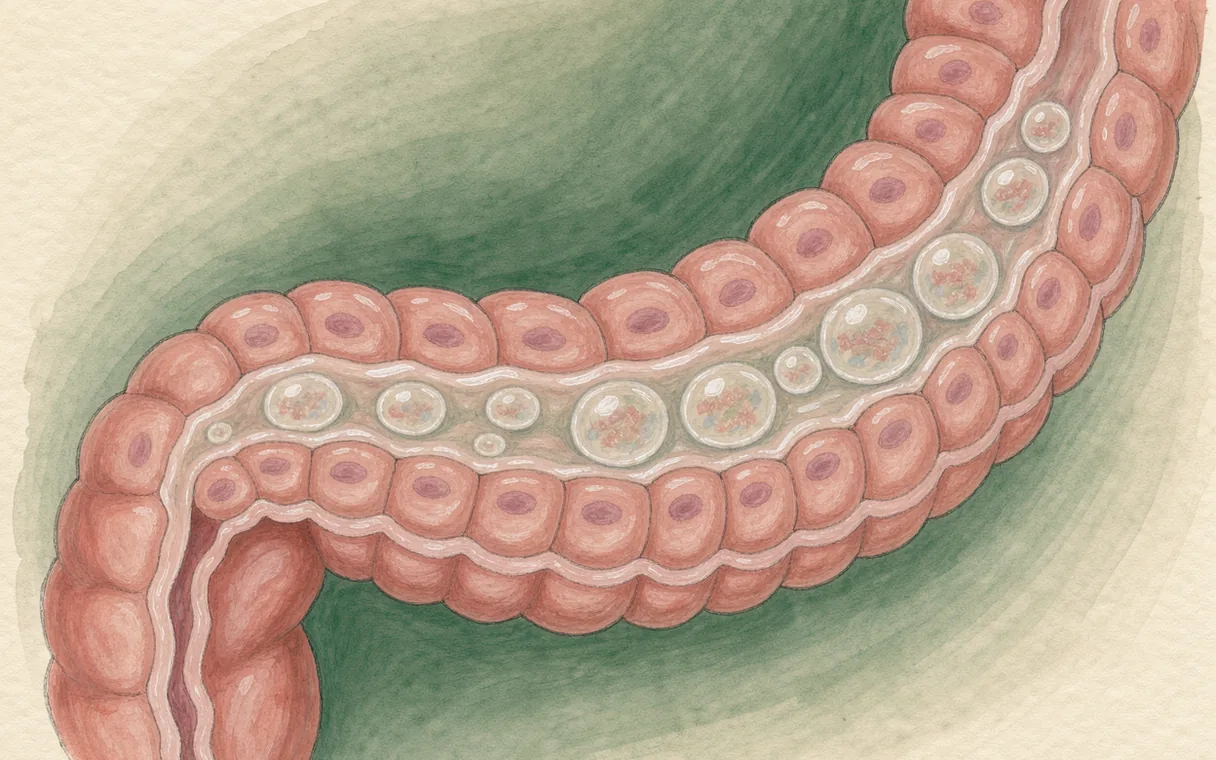
The PepT1 uptake study examined human intestinal epithelial cells and immune cells in culture, as well as mice with chemically induced colitis. PepT1 normally transports small dietary peptides into cells; its expression rises in inflamed intestinal tissue. KPV used that route into the cells.
Inside the cell experiments, KPV reduced NF-kB and MAP-kinase inflammatory signalling and the release of inflammatory cytokines. In mice, it reduced the severity of the induced colitis. Human cells in a dish still leave the response of an entire treated person unanswered.
I’m drawn to PepT1 because it turns “anti-inflammatory” into a question about cell entry. It gives a reason to investigate where a fragment might accumulate, beyond the loose claim that something is “anti-inflammatory.” Location and delivery become experimental questions in their own right.
Protecting KPV during delivery
Free KPV is vulnerable to enzymatic breakdown. The 2017 oral-delivery study put KPV into hyaluronic-acid-functionalized nanoparticles inside a chitosan/alginate hydrogel. In mice with induced colitis, that formulation protected the mucosa and reduced TNF-alpha, an inflammatory cytokine, more effectively than non-targeted delivery.
The 2024 combination study co-assembled KPV with an immunosuppressant and targeted PepT1. It tested acute and chronic colitis in mice, using 4% and 2.5% DSS, respectively, to induce disease. The combination improved outcomes, restored tight-junction proteins and lowered inflammatory cytokines beyond either agent alone.
Those are different experimental preparations. I’d split the credit between KPV, its carrier and the second agent where they were used; attributing the whole result to free KPV would erase the very work those teams were doing. The later papers are largely about making a fragile signal arrive intact.
Human evidence and exposure
KPV has no published human clinical trial establishing a therapeutic benefit, validated pharmacokinetics or clinical safety. There is no measured human half-life or established human amount. Its repeated mouse-colitis findings make that preclinical question worth pursuing, while leaving human outcomes open.
KPV also has no approved drug or dietary-supplement status and remains for laboratory research, not human consumption. The lack of a clinical side-effect list reflects the absence of the necessary human testing. There is no sound collection of community accounts here to fill the gap, and anecdotes would not replace that testing anyway.
The comparison places this delivery-heavy body of work beside MOTS-c's biomarker research and retatrutide's human trials. Each has a different unfinished question. KPV's is still very close to the practical business of reaching the tissue.